Active tower builds along Peachtree Street in Midtown and dense infill developments throughout Buckhead require crane-liftable units to keep trade workers on their assigned deck. Standard ground-level porta potties…
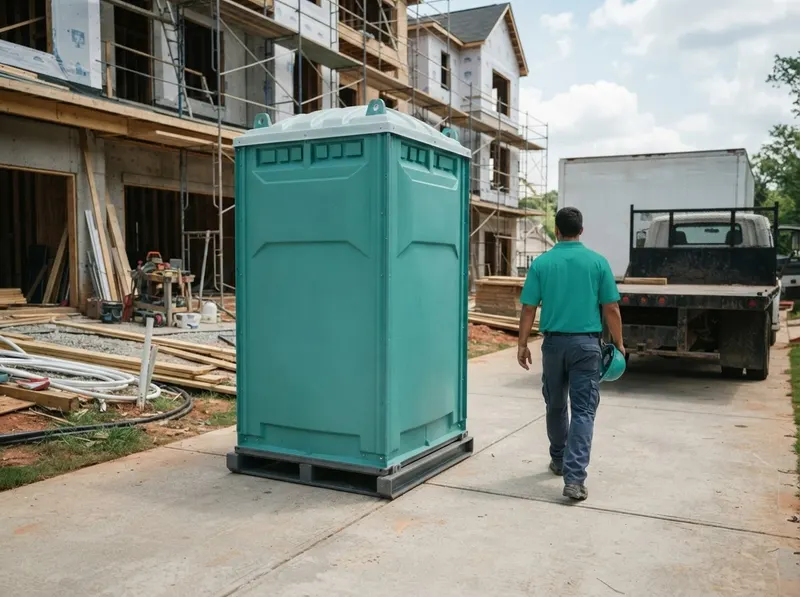
Active tower builds along Peachtree Street in Midtown and dense infill developments throughout Buckhead require crane-liftable units to keep trade workers on their assigned deck. Standard ground-level porta potties force tradespeople to spend twenty to thirty minutes per break riding external hoists to street level. High-rise units solve this bottleneck with heavy-gauge, structural steel cages tested for overhead lifting, allowing rigging crews to hook directly to a crane line and place the restroom exactly where framing or mechanical rough-in is underway.
These units feature heavy-duty, lockable casters and narrower footprints that clear standard 36-inch commercial doorways. On confined urban parcels near the Atlanta BeltLine or Historic Fourth Ward Park where street-level footprint is consumed by laydown yards and concrete pump trucks, rolling a high-rise toilet inside an active floor deck preserves critical ground space. The built-in containment pans and reinforced waste tanks reduce spill risks when flying units over public rights-of-way or populated lower levels.
Choosing a crane-lift unit requires coordinating pump service accessibility. While standard ground units receive direct vacuum hose access from street parking, upper-story units must either be flown down to ground level on designated service days or serviced via temporary construction elevators. For projects rising more than four stories, the productivity savings of keeping workers on their active deck substantially outweigh the logistical coordination of weekly hoist servicing.
Every job gets a firm, written price after a free on-site visit.
Tell us about your high-rise & crane lift portable toilets job in Atlanta and we'll send a clear, written quote — usually the same day.
 Cornerstone Porta Potty Rentals